
Commercial • Industrial • Architectural Finishes
Architectural Concrete Sandblasting & Aggregate Reveal
Controlled abrasive blasting for exposed aggregate, architectural sandblast finishes, and decorative concrete features. PDB Inc. works with commercial project teams throughout the San Francisco Bay Area.
Define the finish. Confirm it on the concrete.
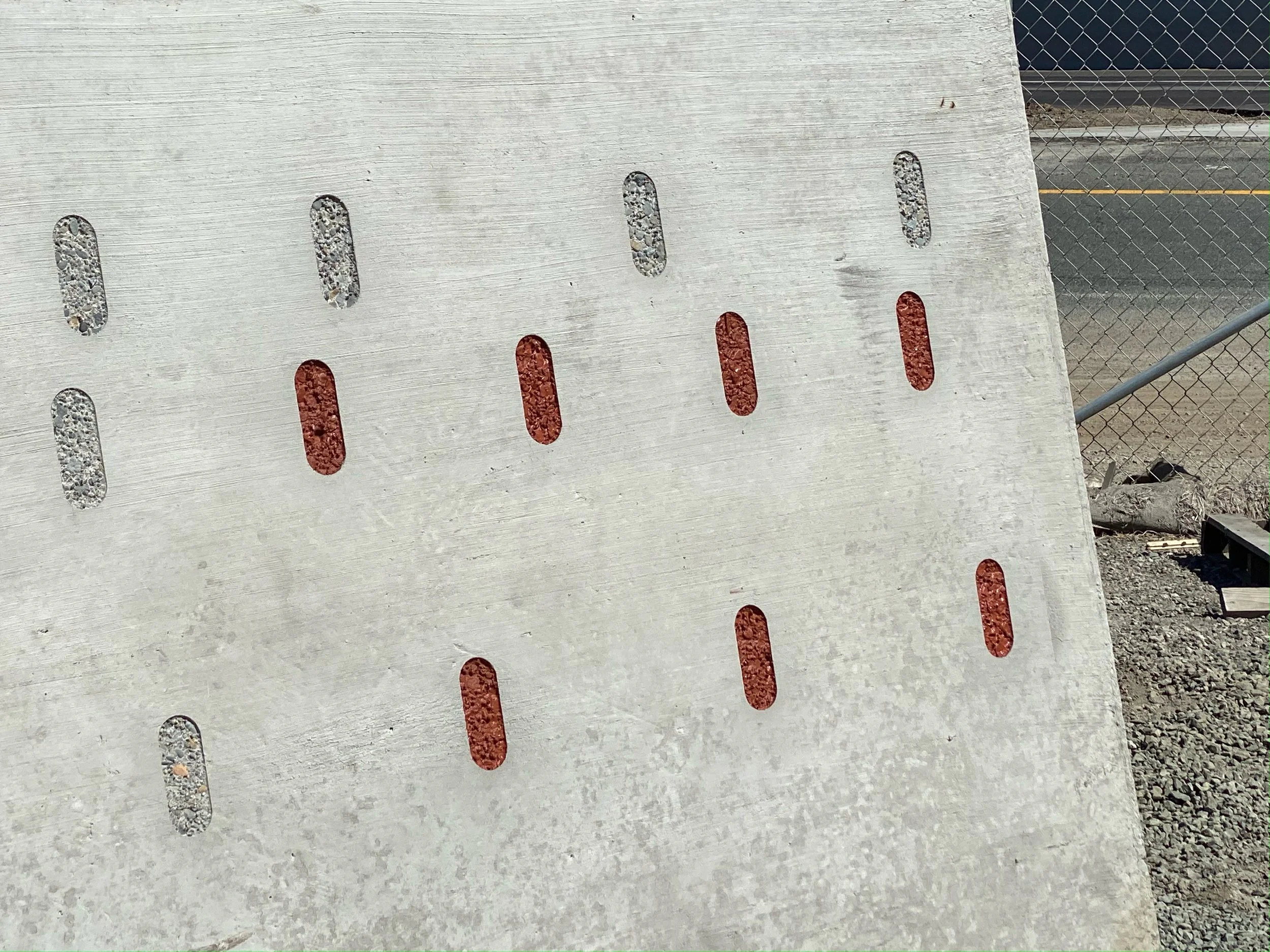
Concrete surface and exposed-aggregate details
Concrete as the finished surface
Reveal the material.
Control the appearance.
Architectural concrete blasting removes a controlled amount of surface paste to reveal texture and aggregate within suitable concrete. Often called architectural sandblasting, the process can create a specified visual finish on precast and cast-in-place elements.
PDB Inc. is a licensed commercial and industrial abrasive blasting and surface-preparation contractor. We coordinate the intended appearance, preparation limits, and acceptance criteria before production begins.
Texture & Aggregate
Expose suitable aggregate and develop a concrete finish that reflects the approved design intent.
Defined Finish Areas
Plan exposed faces, retained surfaces, transitions, reveals, edges, and protected adjacent materials.
A Repeatable Reference
Use an accepted sample or mockup to guide production settings, workmanship, and finish review.
Levels of aggregate exposure
Light, medium, or heavy.
Establish the target on a mockup.
These terms describe relative exposure, not universal depths or guaranteed appearances. The concrete mix and approved sample should define what each finish means for the project.
A finer surface texture
Limited paste removal can expose fine aggregate and create a subtle, more uniform texture where the existing concrete supports it.
More aggregate character
Greater paste removal can make aggregate more visible and develop a stronger visual texture. Distribution and color remain tied to the concrete itself.
A pronounced exposed finish
Deeper exposure may reveal more coarse aggregate on suitable concrete. Confirm feasibility, removal limits, edge conditions, and appearance before proceeding.
A heavier blast cannot create aggregate that is not present or uniformly distributed. PDB does not assume every concrete surface can achieve the same exposed-aggregate finish.
Architectural applications
From panels and facades
to detailed concrete features.
Precast Concrete Finishing
Architectural abrasive blasting for suitable precast panels and components. Coordinate exposed faces, casting variation, handling, and the finish reference with the precaster and project team.
Cast-in-Place Architectural Concrete
Controlled decorative exposure on suitable walls, columns, and other formed concrete. Placement, curing, formwork, and surface finishing influence the result.
Walls, Panels & Facades
Plan texture across elevations, returns, joints, openings, and transitions. Define access, protection, production sequence, and viewing conditions for finish acceptance.
Stencil Blasting for Logos, Lettering, Graphics & Decorative Patterns
Custom stencils can create logos, lettering, graphics, and decorative patterns in suitable concrete surfaces. Final appearance depends on concrete mix design, aggregate type, placement and finish, existing surface condition, stencil design, and the blasting process and depth of exposure. Review detail size, contrast, and edge quality on a representative sample.
Finish Matching
Evaluate an existing reference finish and test whether a compatible appearance is achievable. Differences in mix, age, weathering, or previous treatment may limit the match.
Commercial & Public Spaces
Entry features and decorative concrete elements in commercial buildings, campuses, civic facilities, plazas, and public-agency projects with defined design and site requirements.
The substrate sets the possibilities
The mix and placement
remain visible in the finish.
Architectural concrete finishing depends on more than blasting settings. Removing paste reveals the material beneath it, including variations already present in the concrete.
Mix Design & Aggregate
Aggregate type, size, color, distribution, and paste composition affect exposed texture and tone. Obtain available mix information and finish references before planning the work.
Placement & Curing
Consolidation, segregation, formwork, finishing practices, concrete age, and curing conditions can change the appearance from one area or element to another.
Existing Surface Condition
Review sealers, curing compounds, stains, repairs, weak paste, cracks, and bugholes. Blasting can make voids or inconsistencies more apparent; it does not make every surface uniform.
Exposure & Process Selection
Media, pressure, working distance, dwell time, and the selected process affect removal and texture. Establish acceptable exposure and avoid excessive removal on vulnerable areas.
Mockups before full production
Approve the finish
on representative concrete.
PDB can perform test panels or mockups where appropriate to confirm the desired finish before full production. Samples should represent the actual mix, age, surface condition, and geometry as closely as practical.
Review the sample with the responsible project team under agreed lighting and viewing conditions. Record the accepted appearance, retained surfaces, and limits of the work.
What the mockup should resolve
- Target exposure, texture, and acceptable variation
- Feasibility of matching a reference finish
- Edges, corners, joints, and transitions
- Stencil detail and masking where required
- Protection of surrounding finishes
- Who approves the sample and production finish
One test area may not represent different concrete pours, repairs, or precast batches. Additional samples may be useful where conditions vary.
PDB in the field · Sunnyvale, CA
Sunnyvale Stencil Blasting Project
Sunnyvale City Library Project — decorative stencil blasting and architectural concrete finishing by PDB Inc.
Defined stencil patterns create contrast between the original concrete surface and exposed aggregate. These project photographs show the layout, a close-up reveal, and finished decorative patterns.


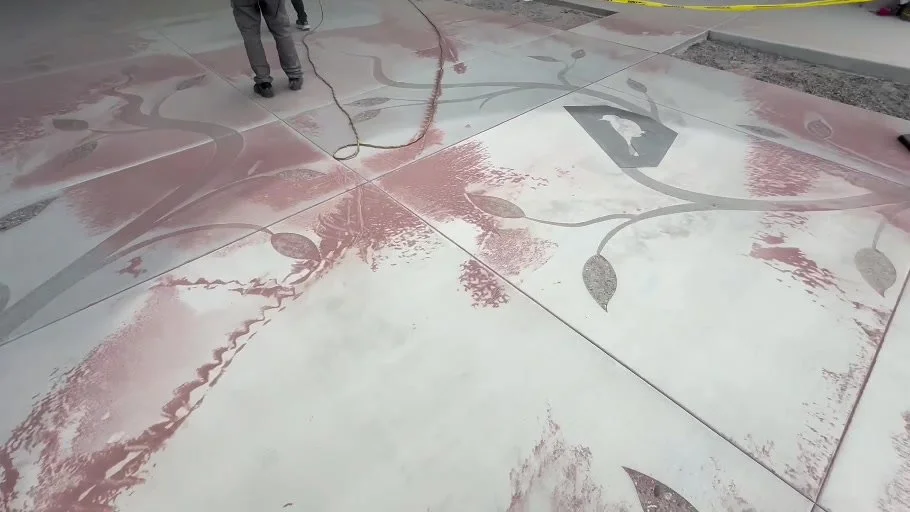
Actual PDB project photography — Sunnyvale library project.
Two different preparation objectives
Appearance-driven finishing.
System-driven preparation.
Architectural Concrete Blasting
The exposed concrete is the visual result. Texture, aggregate reveal, uniformity within agreed tolerances, pattern definition, and the approved mockup guide the work.
General Concrete Surface Preparation
The goal is a substrate condition suitable for a subsequent coating, overlay, flooring, or repair system. Cleanliness and specified surface profile guide preparation for that next trade.
Explore Concrete Surface Preparation ↗Coordinate the architectural scope
Plan the finish and the jobsite together.
PDB coordinates with general contractors, concrete contractors, precasters, architects, construction managers, and public-agency project teams. Access, lifts or scaffolding, containment, sensitive areas, adjacent trades, work windows, and cleanup responsibilities should be defined before mobilization.
Define the intent.
Review drawings, finish schedules, quantities, concrete information, and reference samples.
Confirm the finish.
Perform representative mockups when needed and obtain approval before production.
Protect the scope.
Confirm access, masking, containment, sequence, and surrounding finishes.
Follow the reference.
Complete the agreed blasting scope with the accepted finish reference guiding the work.
Bay Area architectural concrete
A licensed contractor
for project-specific finishes.
PDB Inc. serves architectural concrete projects in Oakland, San Francisco, San Jose, Sacramento, Alameda County, Contra Costa County, Santa Clara County, and Solano County. Contact PDB about commercial, industrial, and public works scopes across the greater Bay Area and surrounding Northern California markets.
Have an architectural concrete scope?
Send the drawings.
Show us the intended finish.
Request a project estimate or site assessment. Share the details that help PDB evaluate the concrete and the desired appearance:
- Project location and approximate quantities
- Walls, columns, panels, facades, or other elements
- Precast, cast-in-place, or existing concrete condition
- Desired aggregate reveal and reference finish photos
- Plans, specifications, and mockup requirements
- Access, surrounding finishes, and schedule
PDB Inc.
Commercial & Industrial Abrasive Blasting and Surface Preparation
Call Us / Discuss Your Project415-720-9143Contact PDBmichael@CA Contractor License #1062900